Cars usually make subtle sounds that are not a cause for concern. But when abnormal sounds arise, like clicks and squeals, it's essential to address it as soon as possible. At Grapevine Lincoln, we want to help you identify various sounds when they come up, so below is a guide explaining what different car sounds say about your car's condition.
Squeaky Brakes
You might notice a squeaking sound from your brakes in the morning, a sound that was not there the previous day when you parked your car. The rust on your brakes' rotors causes the squeaking noises. The rust is a result of moisture that accumulates overnight.
The moisture can be from dew, rain, or even condensation. The pads scrape off the rust from the rotors as the rotors rotate. The rust particles are trapped on the edge of the pad, causing a squeaking noise from your brakes. Parking your car in a climate-controlled space should help solve this problem.
Worn out brake pads can also result in the squeaking noise. Car manufacturers attach wear-indicators on the pad's backing edge. These wear indicators are tiny metal tabs of hardened steel.
The metal tabs hit against the rotor when the brake pads are totally thin, causing the squeaking sound. Replacing your brake pads should solve this problem.
Engine Rattling
You might notice a rattling noise from your engine when you accelerate. When the air-fuel mixture is igniting prematurely in the cylinder during the compression stroke, you are likely to hear these noises. We refer to this situation as pre-detonation or pre-ignition.
It happens when ignition happens before the piston gets to the top of the stroke. Pre-ignition can cause damage to connecting rods, valves, and pistons. When these engine components are not functioning optimally, you get the rattling noise.
Engine Clicking
Your engine is made up of components that work in a reciprocating manner. These components are pistons, valves, and pushrods. If the components become worn out, they work inefficiently, resulting in the clicking sound. Low engine oil can also cause clicking sounds since valve-train components are not well lubricated.
Knocking From Under the Hood
Using wrong spark plugs for your engine can result in the knocking sound. Different spark plugs have different heat ranges. Heat range is the amount of heat a spark plug can take from the combustion chamber. A wrong spark plug won't perform the task well hence the knocking sounds.
Engine Squealing
A failing serpentine belt causes the squealing sounds you hear from your engine. Given that the belt moves several engine components such as the alternator and power steering pump when it fails, these parts also fail hence the constant squealing sound.
Visit our Grapevine dealership for all of your automotive car needs. Contact us to schedule an appointment today.
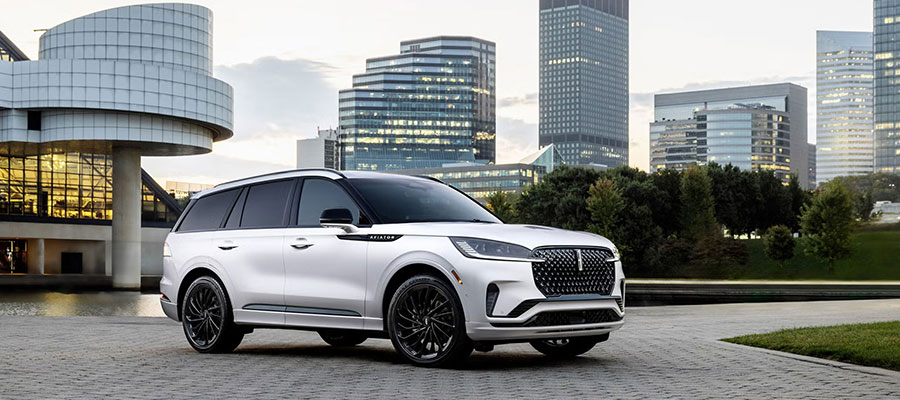
The 2027 Lincoln Aviator is headed to your local dealership soon. Combining an ultra-quiet cabin, robust performance, and high-end styling, this premium three-row luxury SUV is shaping up to be an incredible choice. Here is a quick look at what this new model brings to the table.
Purchase prices do not include tax, title and license. $225 Doc Fee is included in the advertised price. Optional equipment and upgrades may be offered at time of sale for additional cost or removed by the dealer for no additional cost. Get Today's Price is available to all customers and can also be obtained by calling or coming into the dealership today. Prices include the listed Factory Rebates and Incentives. Please verify all information. We are not responsible for typographical, technical, or misprint errors. Inventory is subject to prior sale. Contact us via phone or email for more details.
We use cookies and browser activity to improve your experience, personalize content and ads, and to analyze how our sites are used. For more information on how we collect and use this information, please review our Privacy Policy and Review our Terms.